
The server
What a caller can ask it, and where each answer comes from.
- What a client gets at initialize — what a client gets at
initializeand in the lists it fetches right after: the result as the server sends it, the instructions in their wording, the prompts, and what the tool list weighs. - tools/ — every tool, one page each. What it is for, what it takes, which fields it answers with, and what one call to it came back with.
- resources/ — the other surface a client gets, the one a user picks out of a list rather than calls mid-task.
- Where an answer comes from — the five sources an answer can come from, and what each one needs up before it can.
- The bundled knowledge — what ships in
knowledge/, which is where almost every answer comes from. - Which versions an answer holds for — how a statement that holds for some TYPO3 versions and not others says so. Also why a catalog withholds an entry instead of a qualification.
- Asking the installation — the order the server looks an installation's own answers up in, how it delivers the probe, and what a fallback owes the caller.
- The draft RFC on an MCP interface contract for TYPO3 — a community proposal for an MCP interface contract for TYPO3, read as a reference. What it says and what would change here if the community ever adopted it.
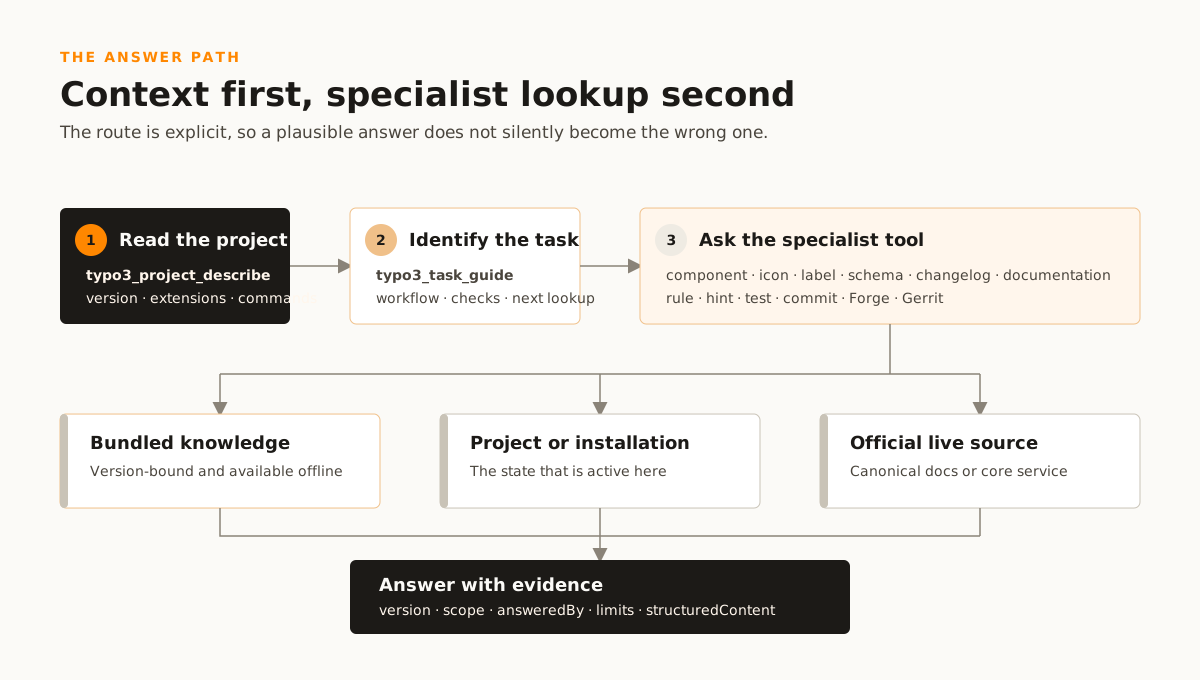
The tools are the server. Everything else on this page is either the other surface beside them or an account of where their answers come from. That is the one thing a caller cannot see from a tool's own description. It is the reason every answer names its source, its version bound and what it left out.